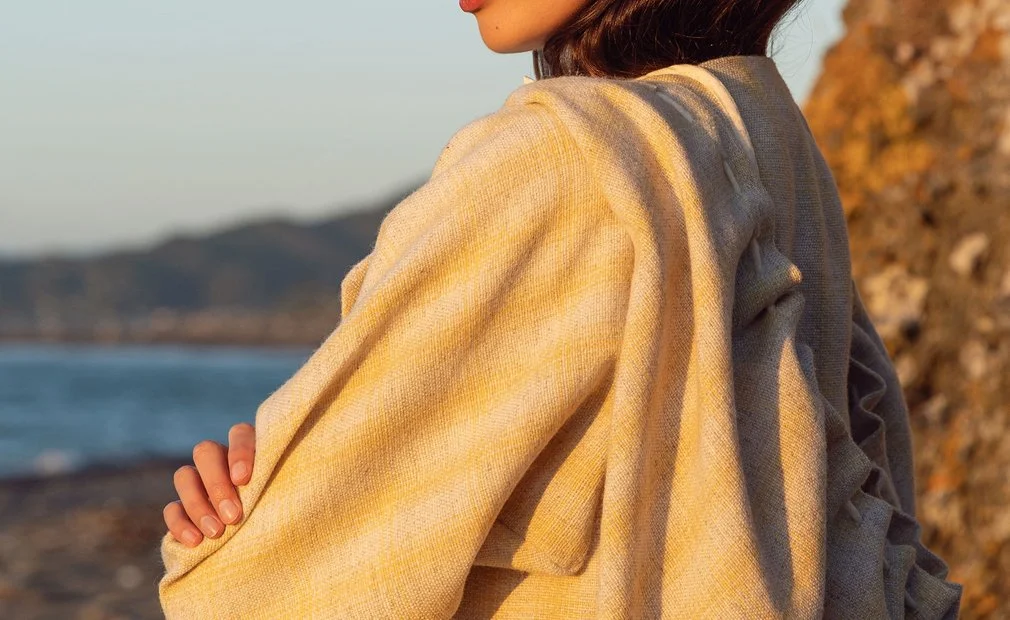
Wayfaring: cloth and coat
Exhibit designers: Deb Cumming & Christine Brimer
Massey University Wellington, New Zealand
Abstract for Interconnectedness: Patterns and Diversity: presentation
Symposium dates Friday 30th August - Sunday 1st September 2024
Venue; Forum North, Whangārei
photographer: Olivia Melhop
model: Tarsha Orsman
This co-design research focuses on the integrity of cloth in the craft of weaving and apparel zero waste pattern processes with reflection of interdisciplinary designer relationships and identity explorations. During this project, design development from concept to prototype is reflected upon when a Textile designer and weaver, and Fashion designer, connect with common design values alongside individual explorations of personal identity and place. This triggered themes ranging from remote island and coastal environments, Shetland Island links, generational connection, and nautical journeys. Inherent to shared values and discussions were the significance of longstanding relationships, local yarn and dye traceability, local sourcing and production of cloth and garment, experimental methods to integrate cloth and apparel creation for both weave and apparel zero waste processes.
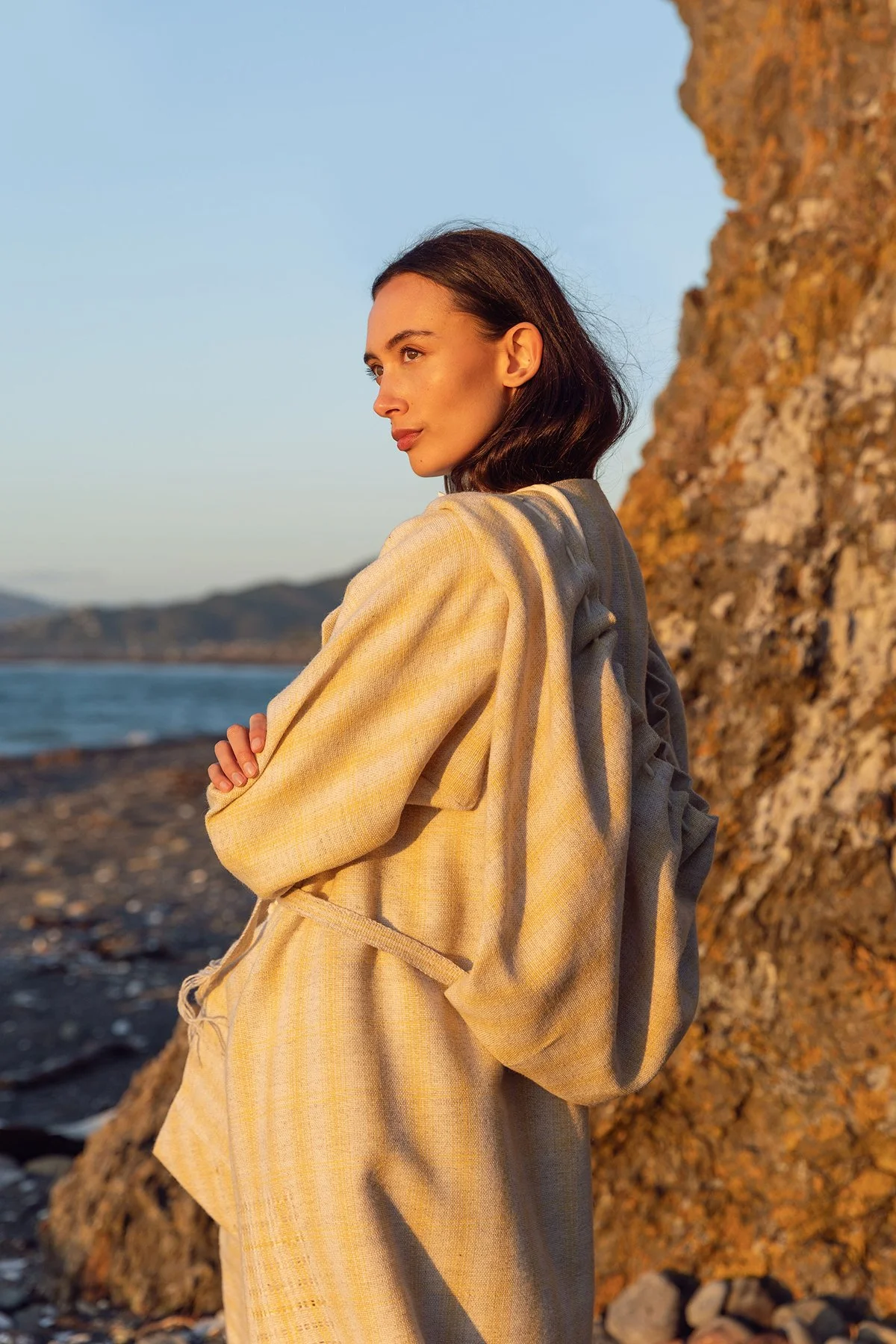
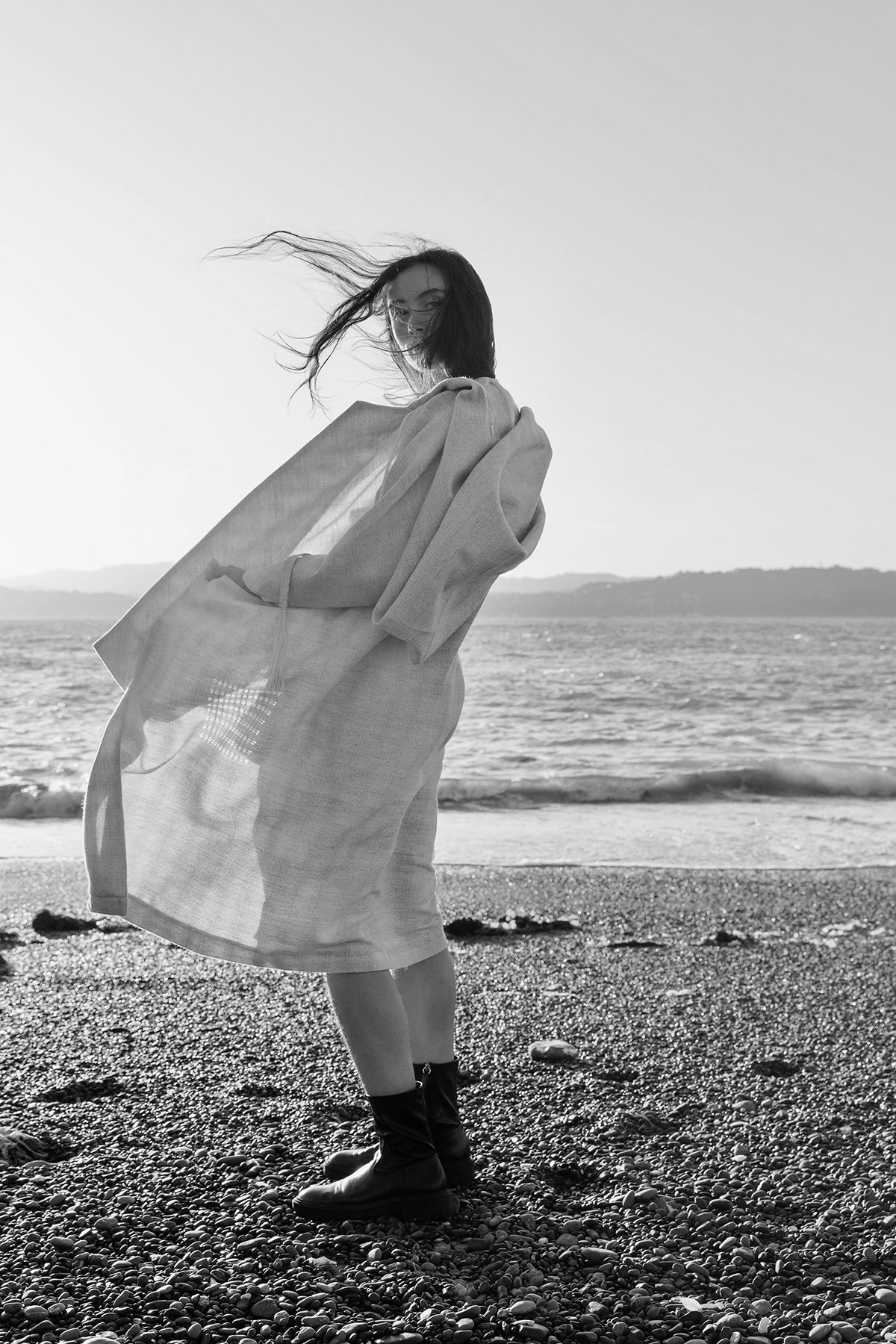

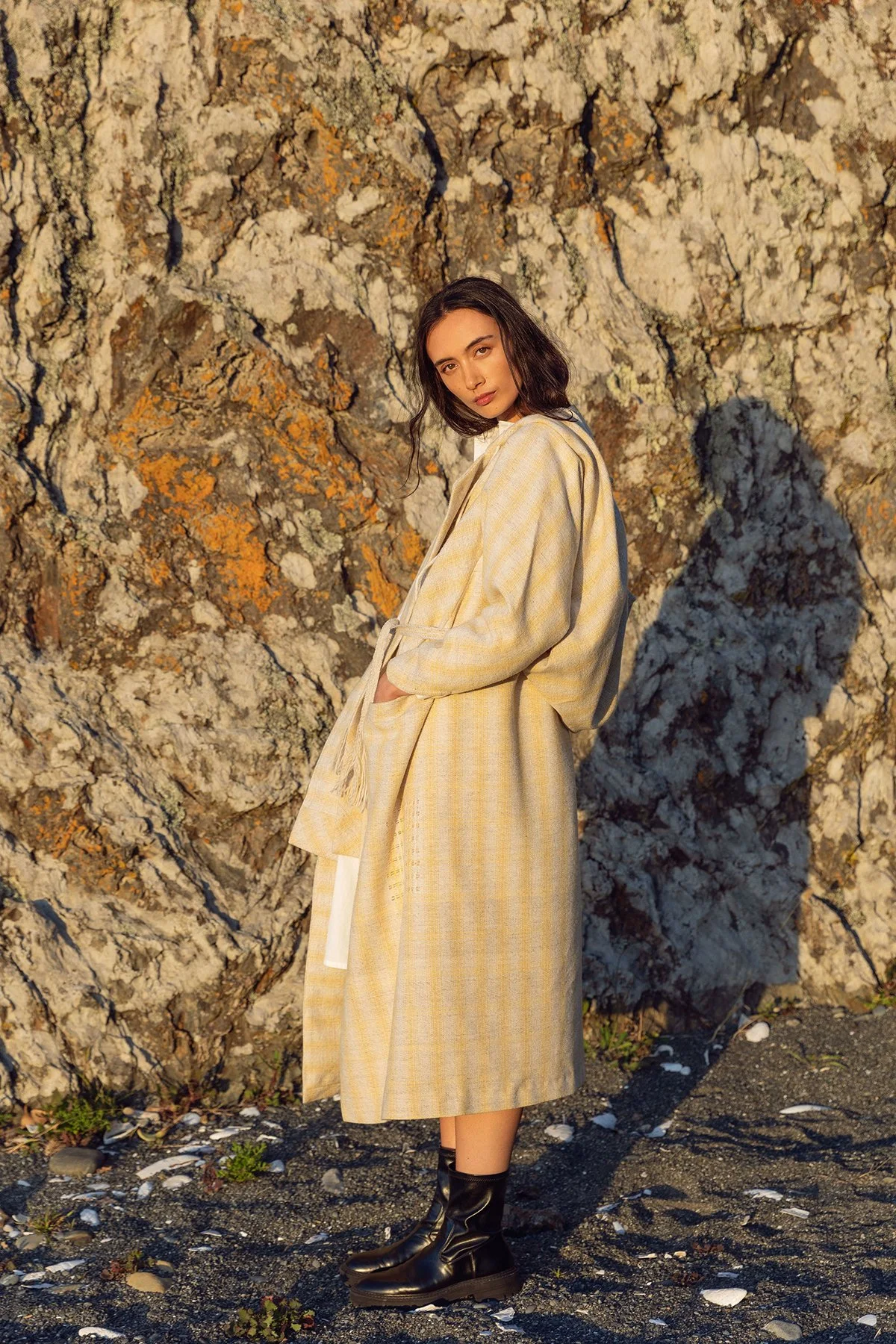
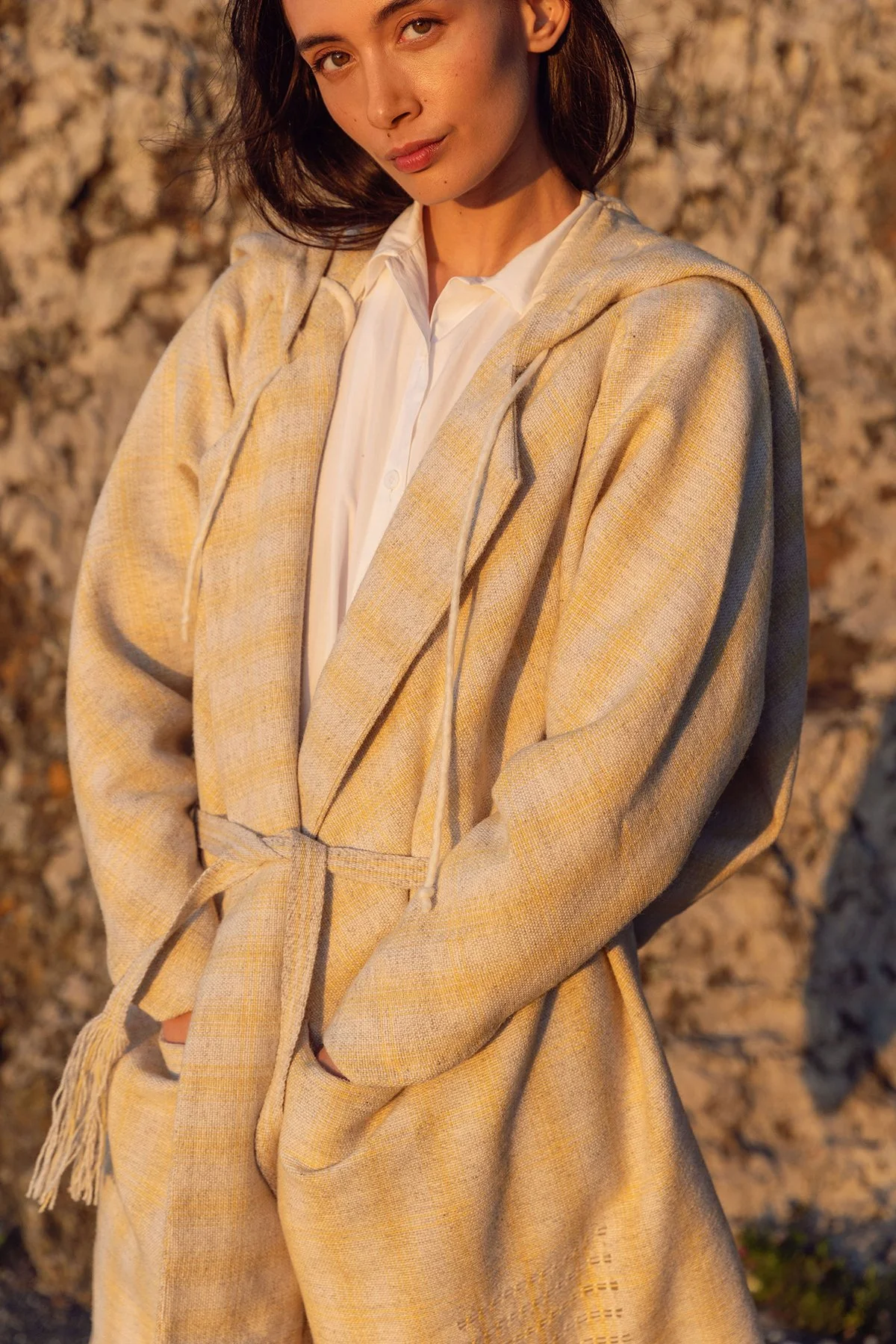
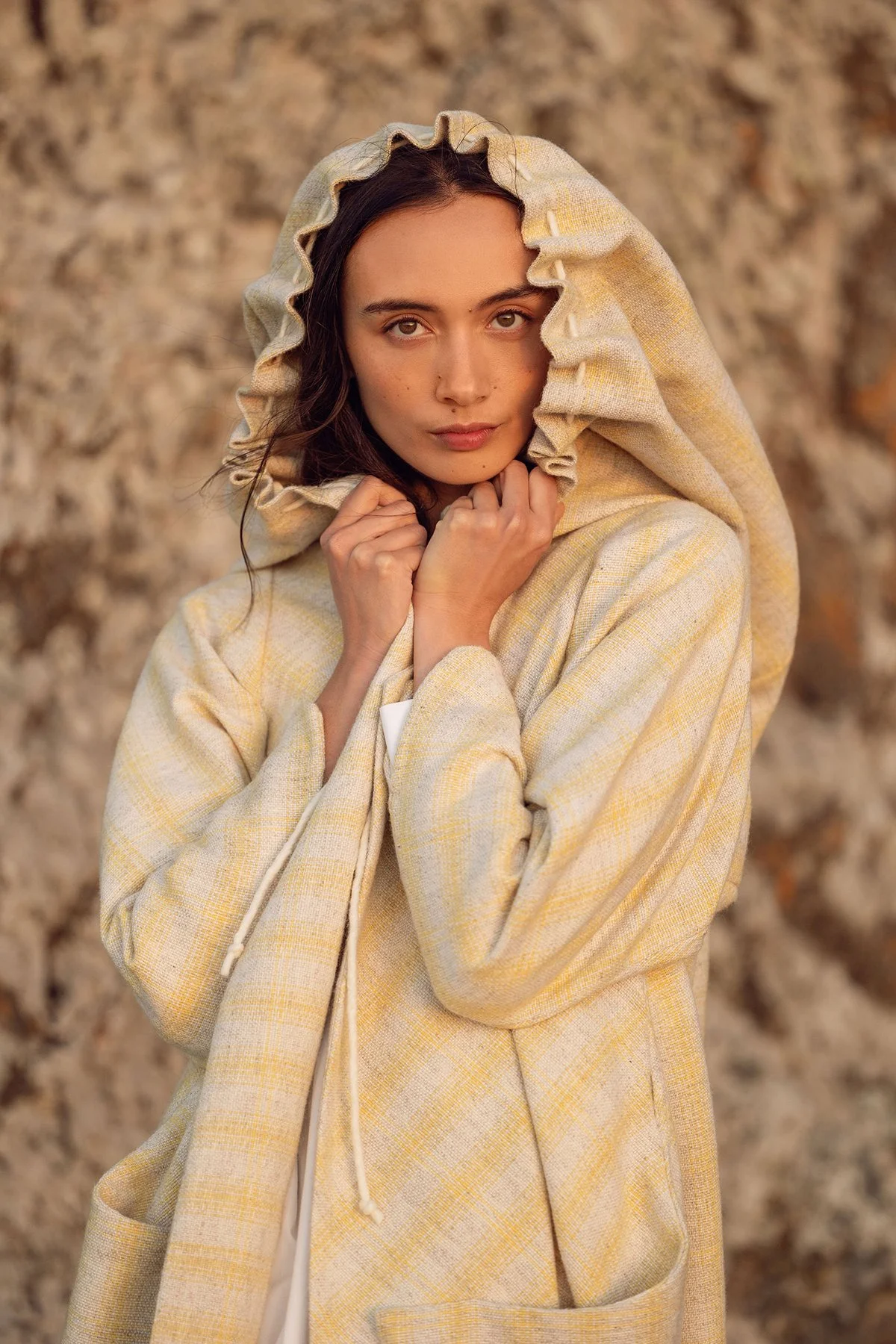
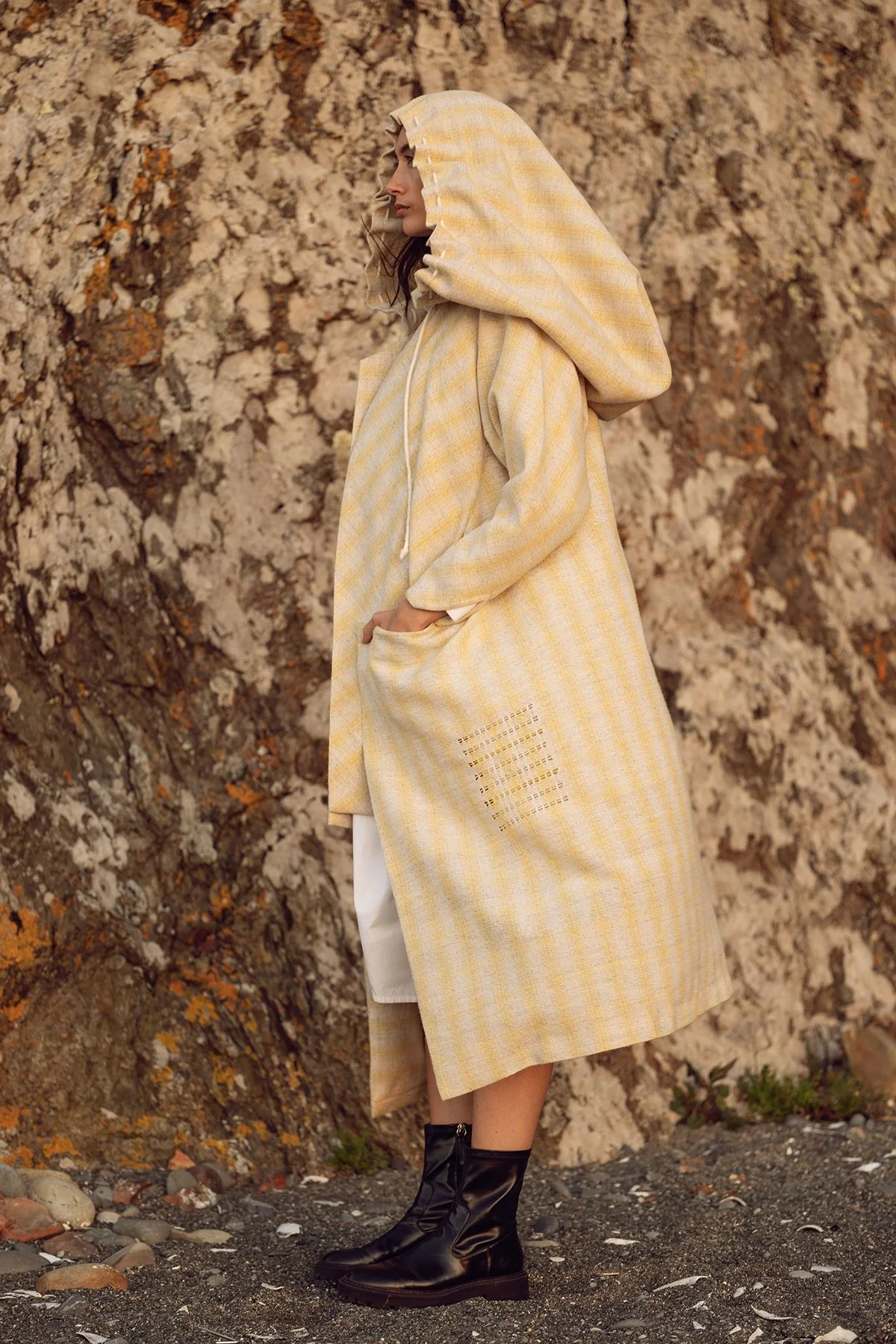
Thinking through making methodology highlights the use of hand mediated technology, abstraction of craft for innovation and reflective response through weave and draping one piece patterns. Metaphorical design elements are woven into the wool’s materiality in the plaid patterning, natural dye and variants of colour and texture, functional holes and linear openings within the weave and subsequent line and form of the garment wrapping the body.
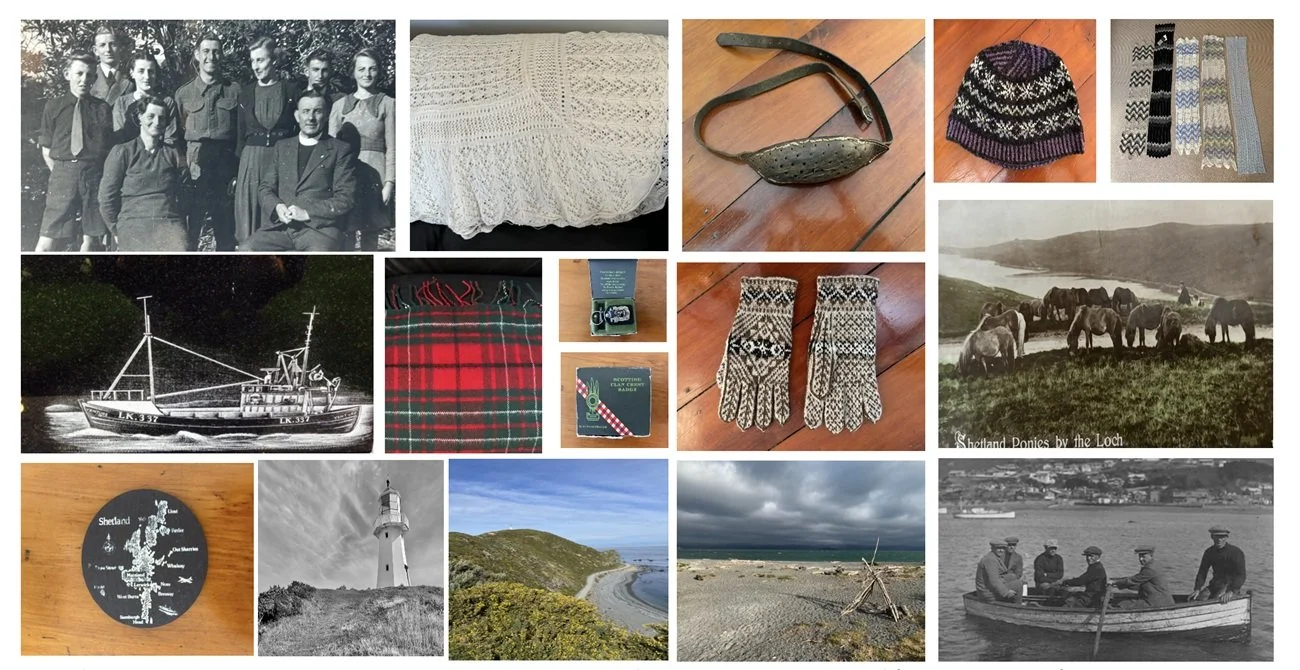
Collection Photos. Deb Cumming
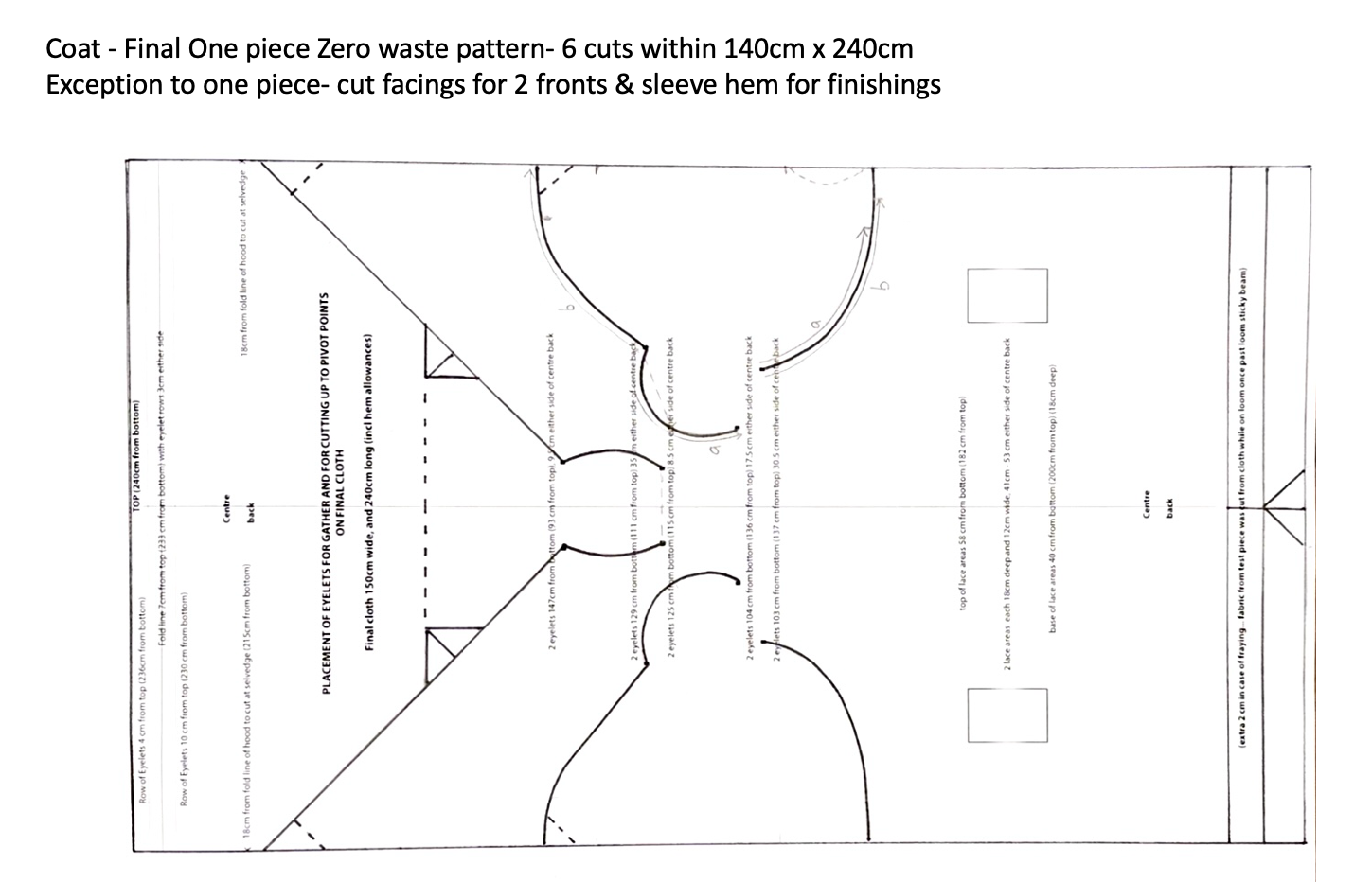
Coat Pattern. Deb Cumming
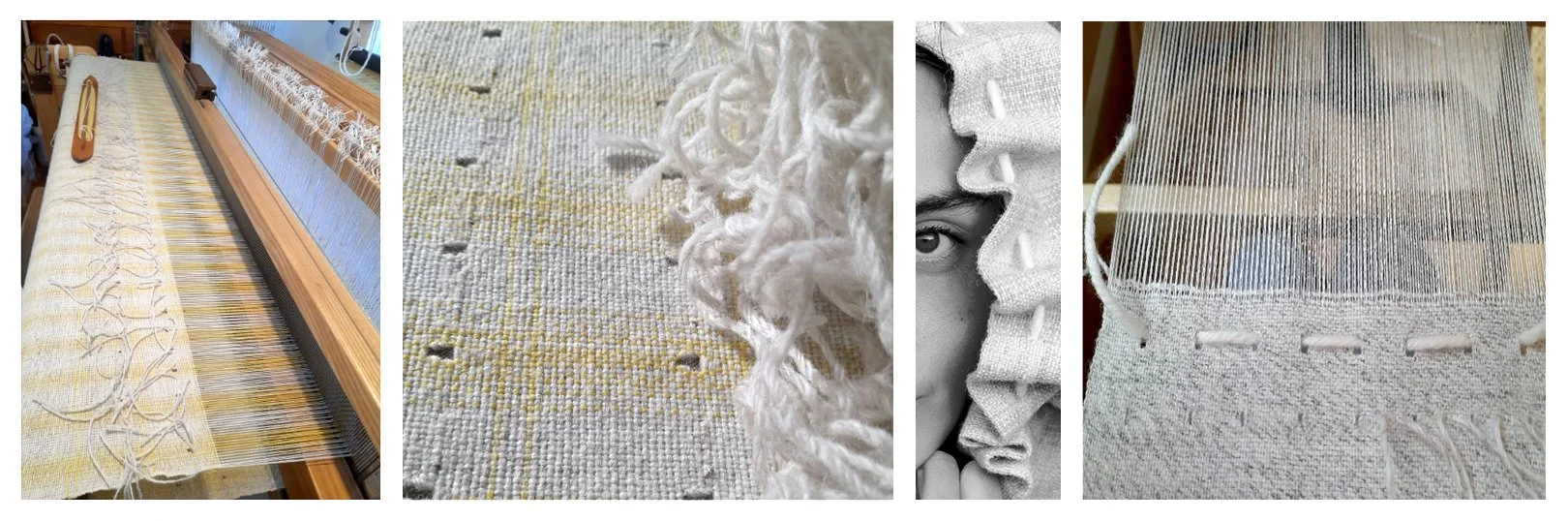
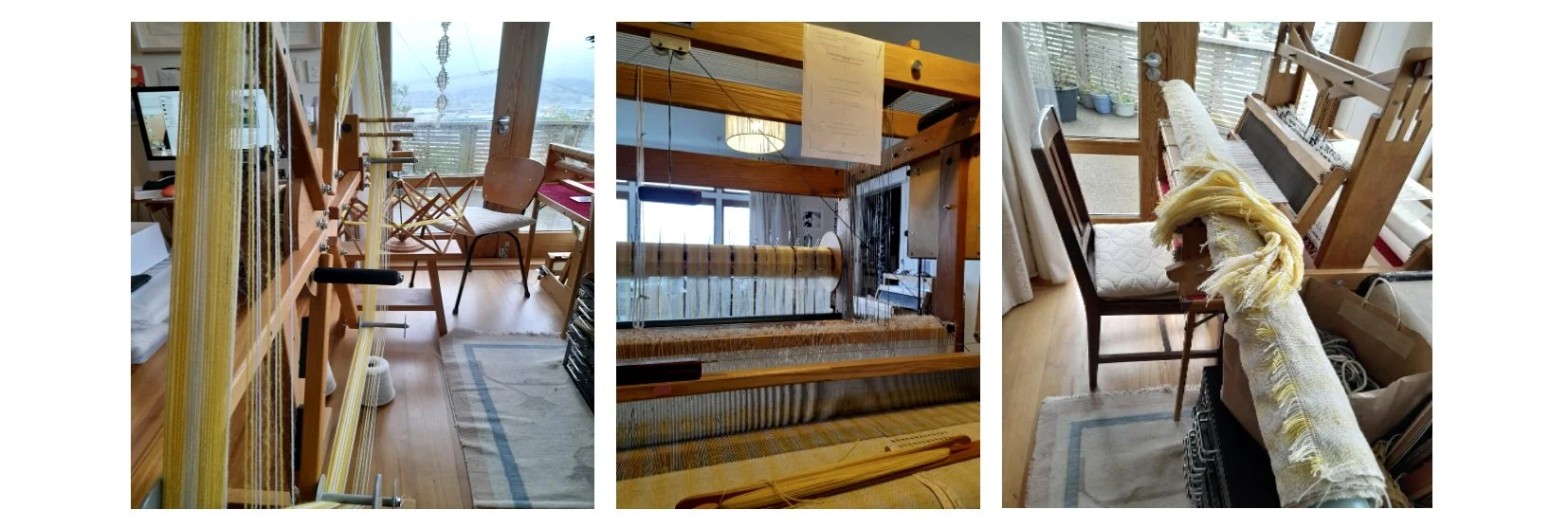
Process - Eyelet Weave. Photo: Christine Brimer
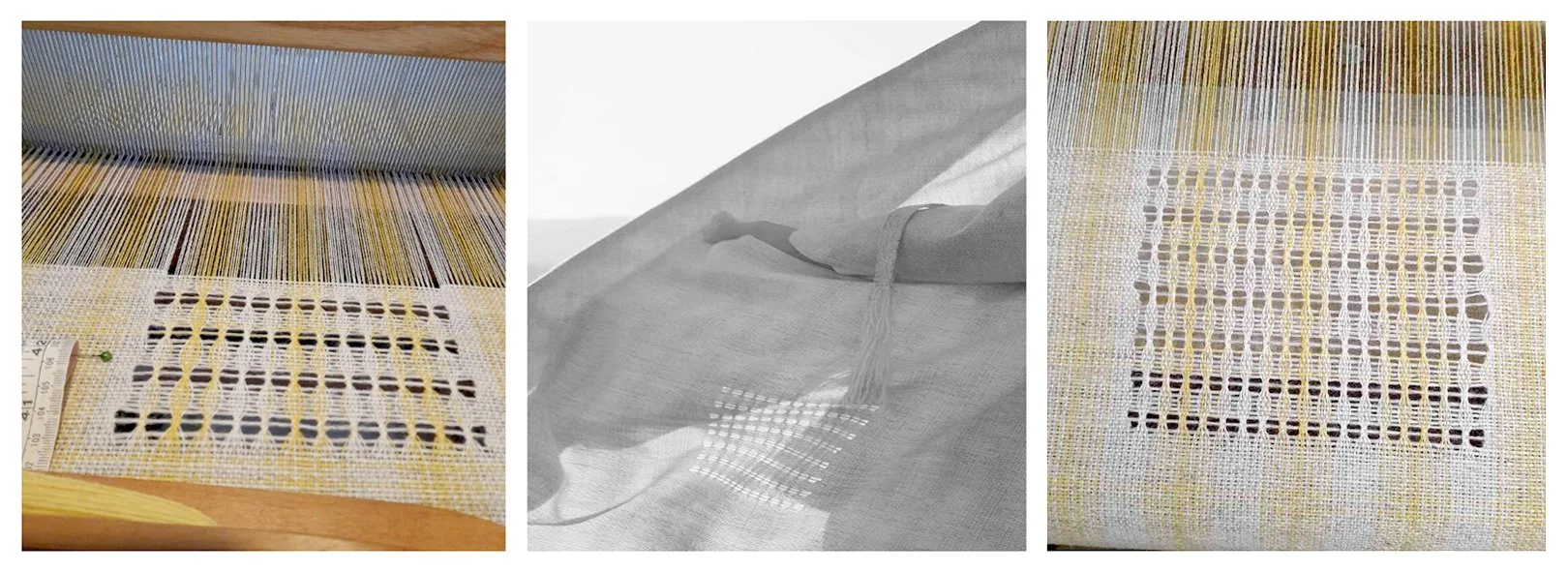
Process - Leno variation. Photo: Christine Brimer
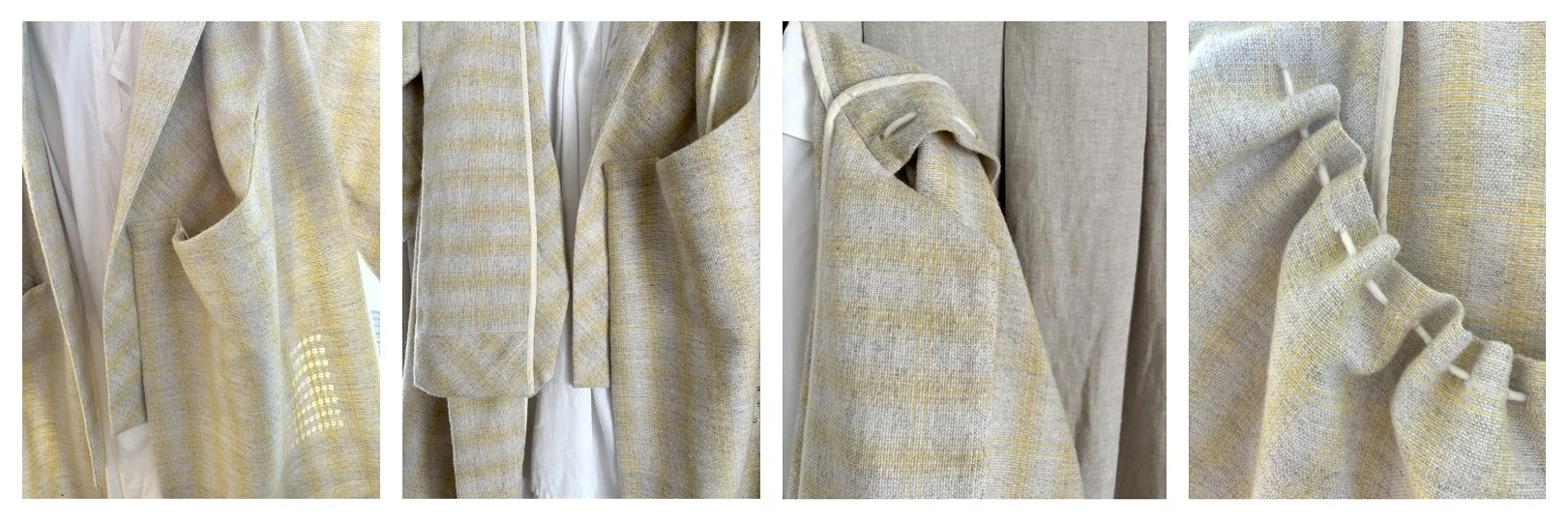
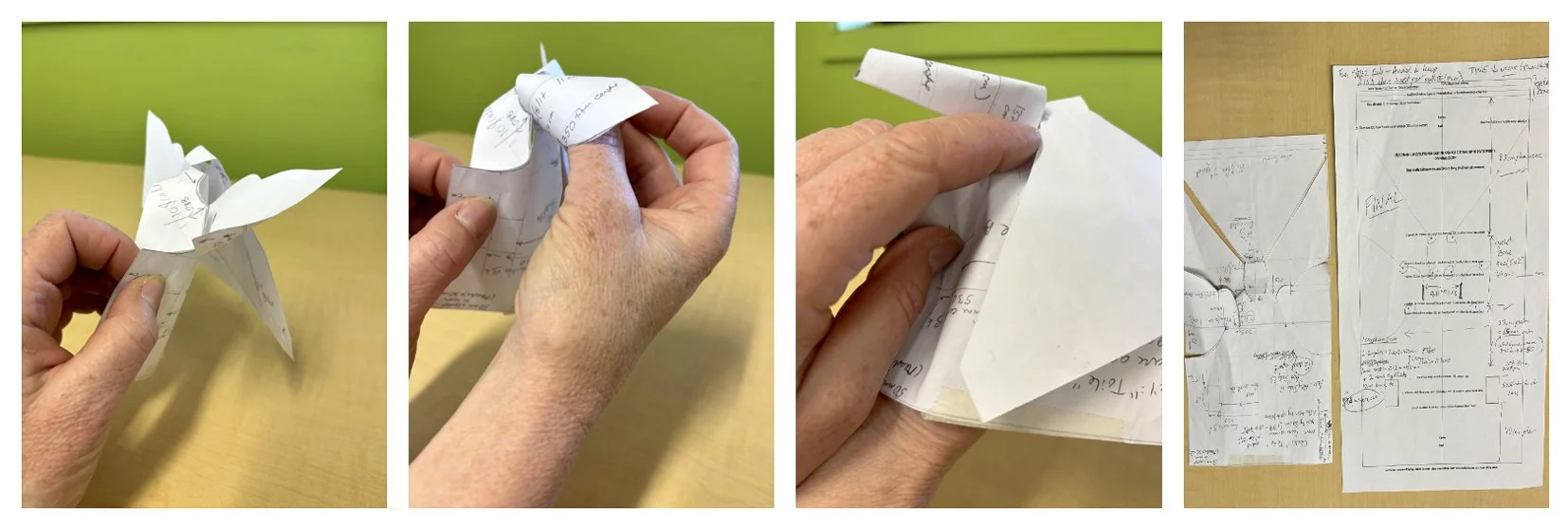
Process - Construction finishings. Photo: Deb Cumming
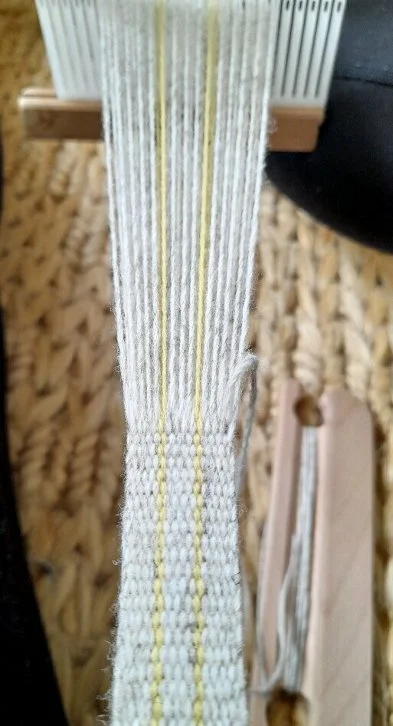
Warp band waist straps. Photo: Christine Brimer
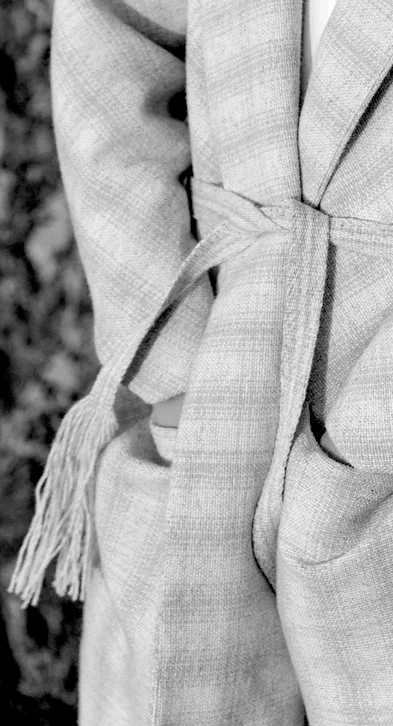
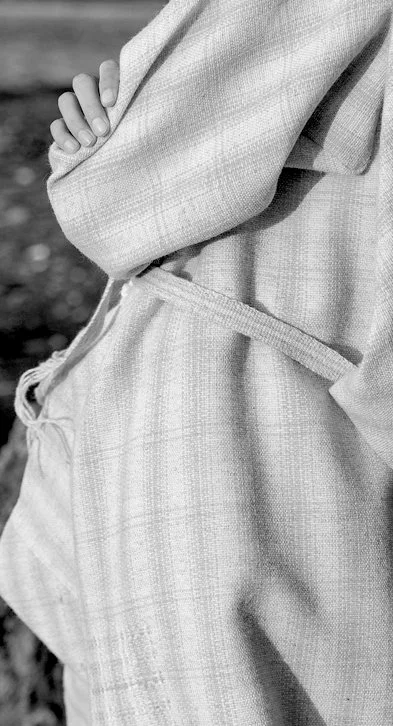
This project resulted in the creation of a zero-waste one-piece coat hand woven from strong wool and contained in its own bag, a wayfaring carrier of shared and diverse exploration.
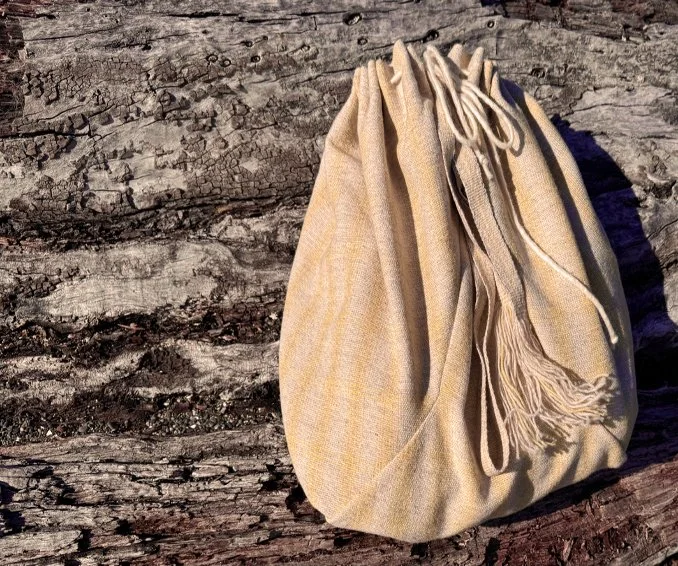
Bag - combined one-piece coat and hood/bag, folded into itself
This project has been about inviting connection and collaboration and experimentation though sharing our respective crafts of making. This has led to innovative methods which enhanced the outcome and future design practise of both designers. There are now many more questions; new possibilities for tools, materials and methods while respecting their limitations, alongside the beginnings of new understandings of creative place and positioning.